01 · 2 min · mirror
The Part Test
Part your hair down the middle in bright light. A widening part — especially at the crown — is one of the earliest signs of diffuse thinning.
Compare monthly photos
Hair is the canary in the coal mine — it reflects internal issues before you feel sick. This is the root-cause playbook for women's hair loss: a self-check quiz, at-home scalp tests, the ferritin connection, supplements, and the medical interventions worth exploring. Built by Dr. Tammy Tucker.
Instant PDF · No spam · Unsubscribe anytime


"Your hair knows the root-cause story. Most medicine just isn't listening."
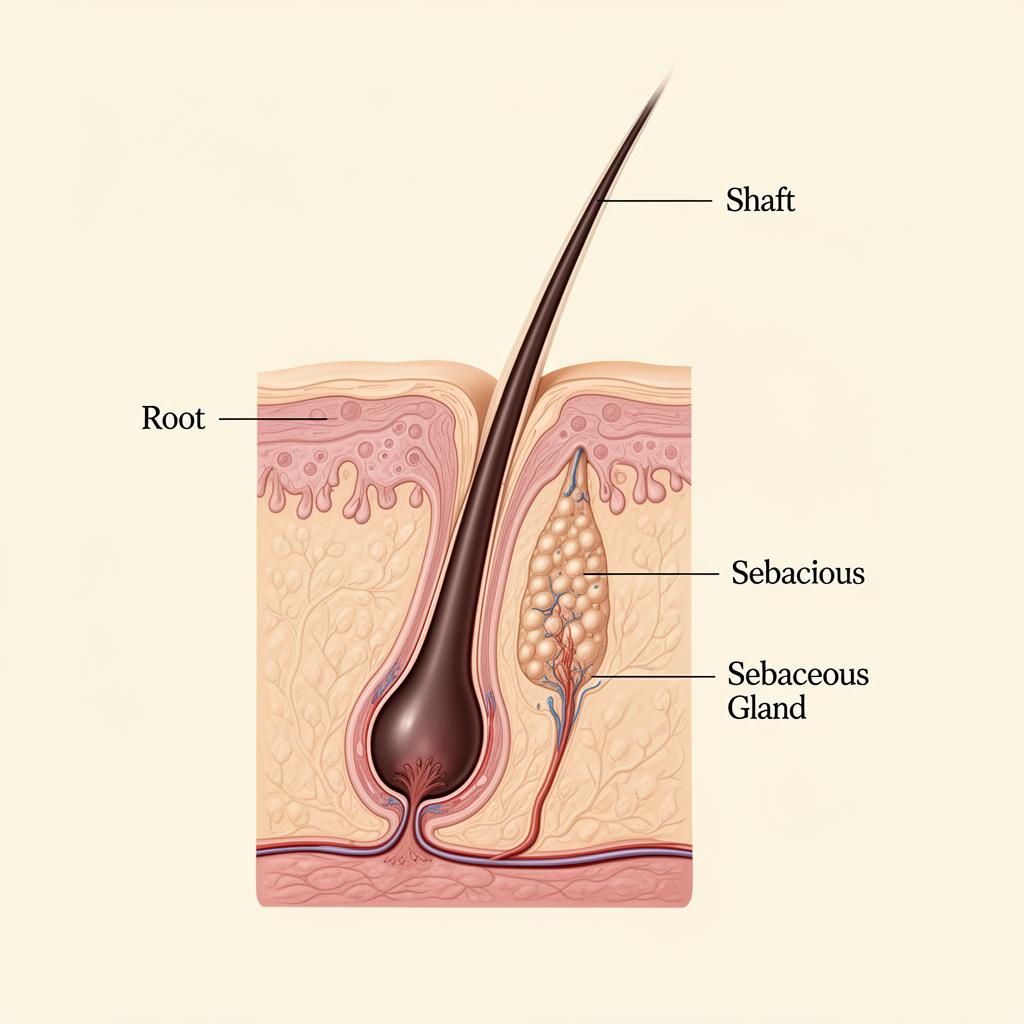
Hair grows in cycles: an active anagen phase, a brief regression, then a telogen shedding phase. Anything that disrupts that rhythm — low iron stores, thyroid drift, a hormone shift, stress, or a nutrient gap — pushes more follicles into shedding than into growth. The result is the diffuse thinning, widening part, and increased fall most women describe.
Ferritin — your stored iron — is the #1 cause of hair loss in US women. Your body prioritizes iron for the heart and brain over the scalp, so follicles starve long before standard labs call you anemic. Research links healthy follicle activity to ferritin of at least 80 µg/L — far above the "normal" floor most labs flag.
When iron stores drop, the body diverts iron away from follicles. Hair prematurely exits the growth phase and sheds — often before any blood work flags 'anemia.'
Perimenopause, postpartum, thyroid dysfunction, and coming off birth control all swing the hormones that govern the hair growth cycle.
Chronic stress and systemic inflammation push follicles into the resting/shedding phase (telogen effluvium), often 2–3 months after the trigger.
Low protein, vitamin D, B12, zinc, or biotin starve the follicle. Modern diets and absorption issues make this far more common than most clinicians test for.
The first two are red-flag questions — patchy scarring loss or systemic symptoms need a clinician now, not a checklist. Answer honestly. Not a diagnosis.
None of these replace a clinical work-up — but they sharpen the conversation. Take photos, write the numbers down, and bring them in. A pattern beats a guess every time.
Part your hair down the middle in bright light. A widening part — especially at the crown — is one of the earliest signs of diffuse thinning.
Collect strands from your pillow, shower drain, and brush at day's end. 50–100/day is normal. Consistently more suggests telogen effluvium.
Pluck one hair and gently stretch it. Healthy hair stretches a little and rebounds. Hair that snaps signals protein, mineral, or moisture deficiency.
Blot tissue on crown, sides, and back. Excess oil hints at seborrheic dermatitis; tenderness or redness suggests inflammation that's hostile to growth.
Lightly tug a small section from several scalp areas. If 6+ hairs release with a light pull, you have active shedding worth investigating now.
Drop a clean strand into a glass of water for 2–4 minutes. Floats = low porosity (needs moisture). Sinks = high porosity (damaged cuticle).
Hair regrowth is a slow story — most of these take 3–6 months to show in the mirror. Get a full lab panel before megadosing iron or vitamin D, and clear new supplements with your clinician if you're on thyroid, blood pressure, or blood-thinning medication.

Professional-quality brands at member pricing through our Fullscript portal.
Open supplement portalFoundational if ferritin is under 80 µg/L. Re-test in 8–12 weeks.
Test 25-OH-D first. Low D is repeatedly linked to telogen effluvium.
Most useful when there's a true deficiency. Pause for 48 hrs before lab work.
Supports follicle DNA synthesis. Don't combine with iron in the same dose.
Provides amino acids (proline, glycine) the hair shaft is built from.
Calms scalp inflammation; supports the lipid envelope of the follicle.
Buffers cortisol — the hormone that drives stress-related shedding.
Especially important for vegetarians, vegans, and PPI users.
Focus a gentle sulfate-free cleanser on the roots. Let suds rinse through the lengths — they don't need scrubbing.
Improves dermal blood flow. Trial data shows measurable thickness gains over 6 months — completely free.
Chronic tension causes traction alopecia at the hairline and temples — eventually scarring and permanent.
Flat irons above 350°F and back-to-back bleach services damage the shaft long before they reach the follicle.
Ordered roughly by evidence and where most people start. Don't jump to PRP or oral minoxidil before you've fixed ferritin, thyroid, and the obvious nutrient gaps.
Full iron panel with ferritin, TSH + free T3/T4 + antibodies, vitamin D, B12, zinc, and a complete hormone panel. Most 'normal' results miss the optimal range for hair.
Target ferritin 80+ µg/L with food (red meat, liver) plus a gentle iron supplement and vitamin C. Address absorption issues (low stomach acid, celiac) first.
Switch to a gentle, sulfate-free wash. Treat dandruff or seborrheic dermatitis. Stop tight ponytails, daily heat, and harsh chemical services during regrowth.
The most-studied topical for diffuse thinning. Best results when you also fix the underlying root cause. Expect 3–6 months to see change.
For perimenopausal and menopausal women, restoring estrogen (and sometimes progesterone) often stabilizes shedding when timed appropriately.
Subclinical hypothyroidism and Hashimoto's are massively underdiagnosed drivers. Work with a clinician who treats based on free T3/T4, not just TSH.
Platelet-rich plasma drawn from your own blood, then microinjected into the scalp. Strong evidence for androgenic and diffuse thinning. Typically 3–4 sessions.
FDA-cleared caps and combs. Modest but real effect on density when used consistently 3–5×/week for 6+ months.
0.625–2.5 mg/day off-label. Growing evidence base for women with diffuse thinning; requires medical supervision for blood pressure.
5 minutes daily improves dermal blood flow and has small trial data showing increased hair thickness over 6 months.
Cortisol and hair share an inverse curve. 7–9 hrs sleep, breath work, and walking outdoors are not soft — they're follicle interventions.
For scarring alopecia, sudden patches (alopecia areata), or anything not responding in 6 months, see a hair-specialist dermatologist for biopsy.
If you'd like support with full lab work, hormone optimization, or building your personalized hair regrowth plan, book a free call with our team.
Instant PDF · No spam · Unsubscribe anytime